Rules & licensing
Security cameras in a NSW rental: the rules and keeping your bond
A wireless, removable outdoor camera is on NSW's list of minor changes landlords can't unreasonably refuse. You still need written consent. Here's how to ask, and how to keep your bond.
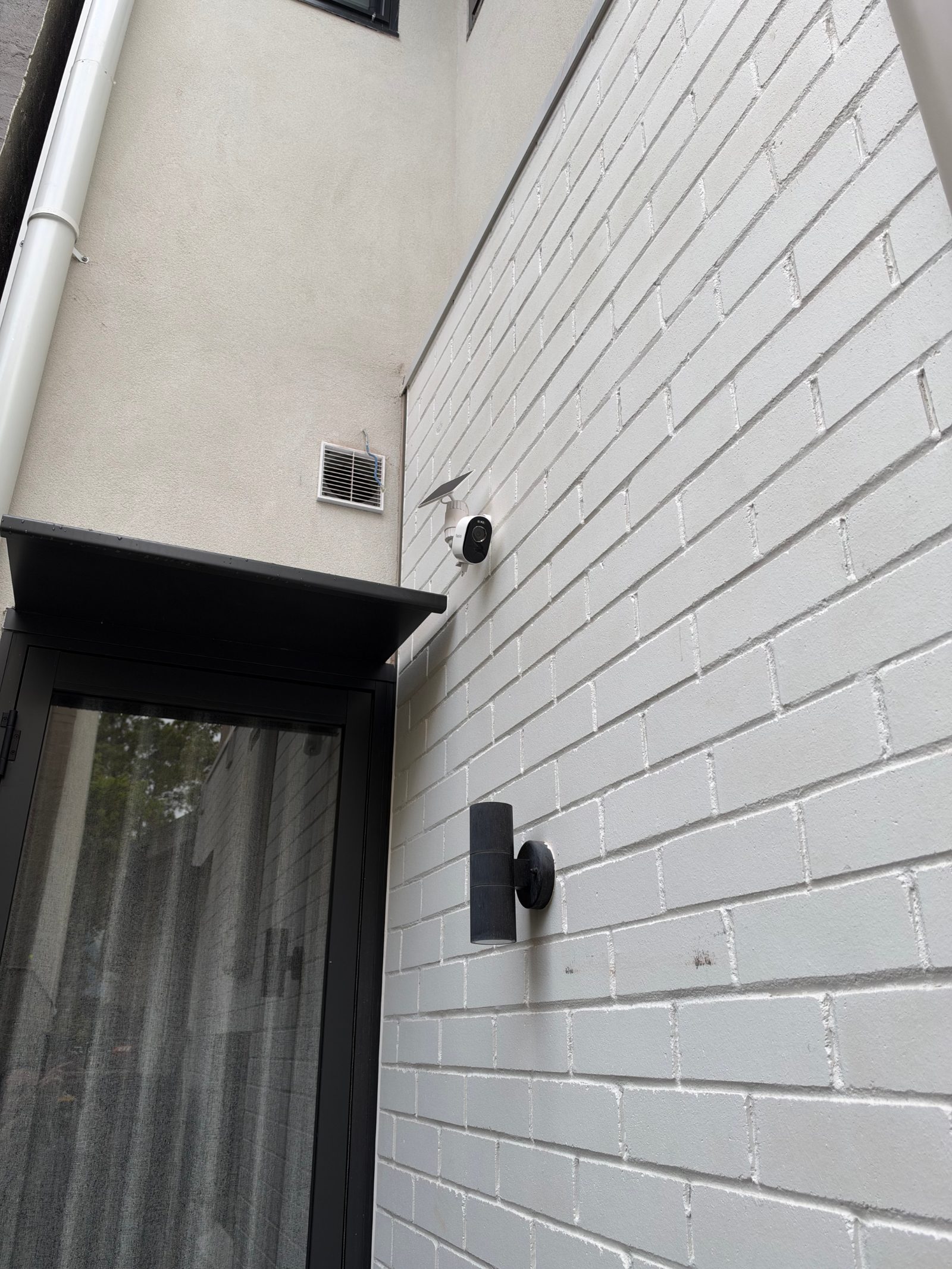
In NSW you need your landlord's written consent before you install a security camera on a rental. The good news is that a wireless, removable outdoor security camera is on the official list of minor changes a landlord must not unreasonably refuse. What actually puts your bond at risk is installing without consent, mounting on strata common property without approval, and leaving holes behind when you move out.
This is general information about the rules, not legal advice. For your own situation, check with NSW Fair Trading.
Do you need landlord permission to install a security camera in a NSW rental?
Yes, for anything you attach to the property. Under section 66 of the Residential Tenancies Act 2010, you must not install a fixture or make an alteration or addition without the landlord's written consent, unless your lease already allows it. The same section says a landlord must not unreasonably withhold consent to changes of a minor nature.
The Residential Tenancies Regulation 2019, clause 22 lists the changes that count as minor. Item (l) is installing a wireless removable outdoor security camera on the rented premises. Item (n) covers any change that doesn't penetrate or permanently modify a surface, fixture or the structure.
Plenty of websites say you can put up a wireless camera without asking. That isn't what the law says. Being on the list means the landlord can't reasonably say no. You still have to ask, in writing.
A camera that just sits on a shelf or bench inside isn't a fixture or an alteration, because nothing is attached. The privacy rules further down still apply to it.
When the minor-change rule doesn't apply
Clause 22 doesn't help you in these situations, and the landlord can refuse:
- Strata buildings, if the camera affects common property or would break the by-laws
- Heritage items: premises listed on the State Heritage Register or identified as heritage items in a local planning instrument. Being in a heritage conservation area isn't the same as being a listed item, so check before you assume either way
- Homes on the loose-fill asbestos (LFAI) register
- Social housing: the security camera item specifically doesn't apply to social housing premises
If your landlord refuses a camera that does fall under the rule, you can apply to the NSW Civil and Administrative Tribunal under section 68 of the Act. The Tribunal can let you go ahead if it finds the refusal unreasonable. It can also decide a refusal is reasonable, for example if the work involves structural changes or couldn't reasonably be repaired or removed.
What your landlord can ask of you
NSW Fair Trading's guidance on security cameras at rental homes was written for renters experiencing domestic and family violence, but it explains the process well. It says a landlord can require you to:
- use an appropriately qualified person to install the camera
- install it in a way that doesn't damage the property
- pay the installation costs, unless you agree otherwise
- remove the camera and repair any damage when the tenancy ends
Section 66(4) of the Act separately says the tenant pays for the work unless the landlord agrees otherwise. Whether every condition on Fair Trading's list applies outside domestic violence situations isn't spelled out. Either way, offering them up front makes your request easier to approve.
How to ask your landlord or agent for consent
A specific request gets answered faster than "can I put up a camera?" Email your property manager and include:
- The camera type: wireless, battery or solar powered, removable, with no cabling run through walls
- Exactly where it will go, for example "on the rear wall beside the laundry door, about 2.4 m high, facing the back gate". Attach a photo with the spot marked
- How it mounts: the bracket, the number and size of screws, and whether they go into a mortar joint, timber or render
- That audio recording will be switched off
- Whether any common property or neighbouring property is affected
- Who will install it, and that you will pay
- That you'll remove it and repair any marks before you move out
Fair Trading suggests covering much the same points. It also notes you may need extra approval if the camera is attached to, uses power from, or records strata common property or someone else's property.
Keep the written reply with your lease and condition report. If you ever have a bond dispute, that email is your evidence.
Which camera setups suit a rental?
| Setup | Landlord consent | Strata approval likely needed? | Bond risk |
|---|---|---|---|
| Freestanding indoor camera on a shelf | Not an alteration | No | Very low |
| Battery or solar camera on your own outdoor wall (house or terrace) | Yes, on the minor-change list | No | Low: a few small screw holes to fill |
| Battery or solar camera on an apartment balcony or external wall | Yes | Usually | Low, but needs both approvals |
| Video doorbell on an adhesive no-drill mount | Yes, but it's a non-penetrating change | Usually, if it's a strata front door | Very low |
| 4G camera covering a rear lane or garage | Yes, on the list if wireless and removable | Depends on where it's mounted | Low |
| Wired or PoE system with cabling | Yes, and the landlord can refuse | Often | High |
Adhesive mounts avoid holes, but they're not always the right choice outdoors. They need a smooth, even surface, so rough render, sandstone and face brick are poor candidates. On those walls a properly screwed bracket is more secure, and two or three small holes in a mortar joint are easy to fill and colour-match. Tell the landlord which you plan to use.
Solar cameras suit renters well because there's no power point to find and nothing to wire. Our solar security cameras page explains where they work in Sydney and where shade lets them down.
Can you put a video doorbell on a rental?
Usually, yes, and a battery doorbell is often the easiest camera to get approved. Ring, for example, sells a No-Drill Mount for its battery doorbells that attaches to the wall with double-sided adhesive, and its support page suggests it for renters. Ring says it needs a smooth, even surface and shouldn't go on glass.
Where you live matters more than the doorbell you choose:
- A freestanding house or terrace: the front door frame belongs to the property you rent. You need landlord consent, and a no-drill mount keeps it simple if the surface suits.
- An apartment or strata townhouse: Fair Trading says an outdoor camera on an external surface such as your front door or balcony is usually a change to common property. Your landlord's consent doesn't give you owners corporation approval. Check the by-laws and ask your agent to raise it with the strata manager.
Doorbells are built to pick up sound, so the audio needs extra thought. Fair Trading recommends a camera that doesn't record sound, or one with sound recording switched off, and points to section 7 of the Surveillance Devices Act 2007, which deals with recording private conversations. Check whether your doorbell lets you turn off audio recording while keeping two-way talk.
Our video doorbell installation page covers the models we work with, including doorbells you've already bought.
Neighbours, housemates and privacy
Approval from your landlord covers the alteration. It doesn't cover what the camera sees. A few rules apply:
- Neighbours. Under section 51 of the Residential Tenancies Act, a tenant must not interfere with a neighbour's reasonable peace, comfort or privacy. Fair Trading also advises positioning the camera so it captures only what is reasonably necessary for your safety or security.
- Entering other property. Fair Trading warns against installing, using or maintaining a camera by entering someone else's property without permission, which section 8 of the Surveillance Devices Act covers. Don't mount anything on a shared side fence or a neighbour's wall unless the owner agrees.
- Audio. Turn it off unless everyone being recorded has agreed.
Inner Sydney terraces make this harder. On a narrow frontage in Erskineville or Newtown, the neighbour's front door can be within a metre or two of yours. Mount the camera lower and angle it down onto your own step and path. Then use the app's detection zones to ignore the footpath and next door, and privacy masking, if your app has it, to black out the neighbour's windows.
Zones also cut down false alerts. When we added a detection zone and person-only detection to one busy business driveway camera, its recordings fell by about 97%, from about 1,300 a day to under 40.
In a share house, your housemates have the same right to privacy as anyone else. Agree in writing before any camera covers shared indoor space. Never point one at bedrooms or bathrooms, and keep audio off. An outdoor camera on the front door is far less contentious than an indoor one in the lounge room.
Taking your cameras with you when you move
Under section 67 of the Act, you can remove a fixture you installed before you hand back the keys. You must tell the landlord about any damage the removal causes, and either repair it or pay for the repair. Section 51 requires you to leave the property as nearly as possible in the condition it was in at the start, fair wear and tear excepted.
A move-out routine that protects your bond:
- Photograph the spot before installing, and add a note to your condition report if possible
- Keep the original screws and wall plugs in a labelled bag
- Remove the camera and bracket before the final inspection, not on handover day
- Fill holes with exterior filler matched to the wall colour, or a mortar-coloured filler for brick joints
- Photograph the repaired spot and keep it with your consent email
- Factory reset the camera if you're selling it. If you're keeping it, connect it to the Wi-Fi at your new place
The memory card goes with the camera, so your recordings come too. But the card is also lost if the camera is stolen, which is why an off-site copy makes sense. WireFree Cloud keeps a copy of each recording from compatible Reolink cameras, stored in Sydney. It isn't tied to the address, so it moves house with you.
If you'd rather not do the removal and refitting yourself, WireFree Security can take cameras down (from $40 per camera) and reinstall them at your new place (from $149 for one camera). See our installation prices for the full list. We also install cameras you already own, so you don't need new gear for a new rental.
The short version
- Ask in writing, every time, even for a wireless camera
- A wireless, removable outdoor camera is a minor change, so a reasonable request should be approved unless strata, heritage listing, the LFAI register or social housing rules apply
- In apartments, get owners corporation approval as well as landlord consent
- Switch audio off and keep the view on your own property
- Photograph before and after, keep the screws, and repair holes before the final inspection
Wondering whether the installer needs to hold a licence? We cover that in do you need a licence to install CCTV in NSW.
Common questions
What happens if my landlord doesn't reply to my camera request?
Section 66 of the Residential Tenancies Act has no automatic approval for alterations, so silence isn't consent. Follow up in writing with your agent and keep copies of everything. If you still get no answer, or an unreasonable refusal for a camera on the minor-change list, you can contact NSW Fair Trading for help or apply to the NSW Civil and Administrative Tribunal under section 68, which can order that you may go ahead.
Can I put a security camera on my apartment balcony?
Probably, but you'll usually need two approvals. NSW Fair Trading says an outdoor camera on an external surface such as a balcony or front door is usually a change to strata common property. Your landlord's consent and the owners corporation's approval are separate. Your landlord must give you the strata by-laws before you sign the lease, so check those first, then ask your agent to raise the request with the strata manager.
Can my landlord install cameras at the property I rent?
Section 50 of the Residential Tenancies Act gives tenants a right to quiet enjoyment. It says a landlord or agent must not interfere with your reasonable peace, comfort or privacy in using the home. A landlord's camera that monitors you inside the property would sit uneasily with that. If you believe a security camera is breaching your privacy, NSW Fair Trading accepts complaints, and you can get advice on your specific situation there.
Where should a renter keep security camera footage?
Most wireless cameras record to a memory card inside the camera, so a thief who takes the camera takes the footage too. An off-site copy fixes that and moves house with you. WireFree Cloud stores copies from compatible Reolink cameras in Sydney, from $3.99 a month for one camera with 90 days of recordings. Some older models need a Reolink Home Hub. When we supply the Reolink cameras, the first 6 months are included.
Sources
- Installing security cameras at your rental home in circumstances of domestic violence and abuse — NSW Fair Trading / NSW Government
- Residential Tenancies Regulation 2019 (clause 22) — NSW Legislation
- Residential Tenancies Act 2010 (sections 26, 50, 51, 66, 67, 68) — NSW Legislation
- Installing No-Drill Mount for Ring battery doorbells — Ring Australia
- No-Drill Mount for Battery Video Doorbell — Ring Australia
General information, not legal advice. Prices are “from” prices; your quote depends on the site.