Rules & licensing
Do you need a licence to install CCTV in NSW? Rules explained
You don't need a licence to put cameras on your own home. Anyone paid to install them does. Here's how NSW licensing works and how to check an installer.
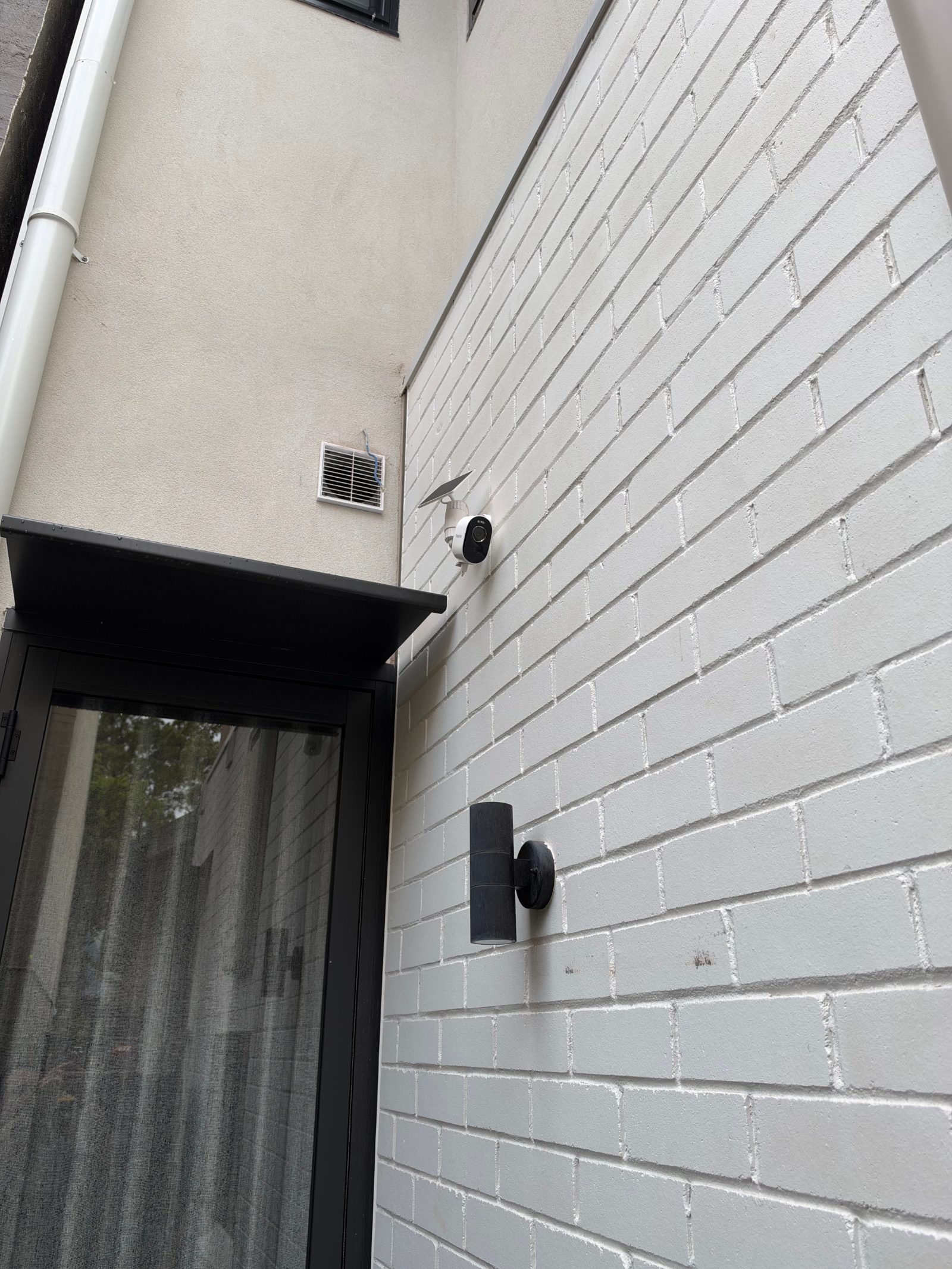
You don't need a licence to install security cameras on your own home in NSW. Anyone who installs, sells or advises on CCTV as part of a business or job does: the person doing the work needs a Class 2C security licence, and the business needs a master licence, both issued by NSW Police. That includes electricians, handymen and IT contractors.
This is general information about the Security Industry Act 1997, not legal advice. If your situation is unusual, check with the Security Licensing & Enforcement Directorate (SLED) at NSW Police.
Who needs a licence to install CCTV in NSW?
Section 4 of the Security Industry Act 1997 lists the things that count as a "security activity". The list includes installing, maintaining, repairing or servicing security equipment, selling it, and giving advice about it. It only counts as a security activity when someone does it in the course of running a business or as part of their job.
The Act defines security equipment broadly, including any mechanical, electronic or other equipment designed or adapted to provide or enhance security or protect property. Security cameras, video doorbells and alarms fall inside that. SLED's own Class 2 licence page names CCTV cameras specifically. The Act and regulations do carve out some exemptions, which SLED summarises on its Security Licence Exemptions page.
There are two layers of licensing:
- An operative licence for the person who does the work (Class 2 for equipment work).
- A master licence for the business that sells the service, even when the business is one person. SLED's FAQ says a self-employed operative needs both.
The Class 2 licences that matter for cameras
There are five Class 2 subclasses, and one person can hold more than one. Three of them matter for CCTV:
| Licence | What it allows | Training SLED requires |
|---|---|---|
| 2A Security Consultant | Identifying and analysing security risks, and recommending ways to reduce them | Certificate IV in Security Risk Analysis plus five years' relevant experience |
| 2B Security Seller | Selling security equipment and advising on its use. Not installing, maintaining or repairing | No formal training evidence |
| 2C Security Equipment Specialist | Selling, installing, maintaining, repairing, servicing and advising on security equipment, including CCTV and alarms. Also covers locksmithing | No formal training evidence |
The other two subclasses, 2D (Security Trainer) and 2E (Private Investigator), don't apply to camera work.
SLED doesn't ask Class 2C applicants for proof of a training course, though it expects them to have the skills to work safely. Applicants go through probity checks instead, including fingerprints and criminal record checks. Anyone convicted of a prescribed criminal offence in the past 10 years isn't eligible. So a 2C licence mostly tells you the person has been vetted. It doesn't prove they're good at the job.
The master licence for the business
The master licence subclass depends on how many licensed people the business can provide on any one day:
- MA: a self-employed person doing the work themselves, with no staff.
- MB: up to 3 people.
- MC: up to 14.
- MD: up to 49.
- ME: no limit.
A security business has to include its master licence number in its advertising, including its website. SLED lists a maximum fine of $11,000 for an individual and $22,000 for a company for leaving it out. A missing licence number on a website or ad is a fair warning sign.
Does an electrician, handyman or IT person need a security licence?
Yes, if they're being paid to install your cameras. SLED's frequently asked questions answer this directly: a licensed electrician installing cameras for clients needs a Class 2C licence, because anyone who sells, installs, maintains, repairs or services security equipment needs one.
The same logic covers a handyman booked through an odd-jobs app, a builder adding cameras at the end of a renovation, and the IT contractor setting up cameras at your office. What matters under the Act is that they're doing the work as part of a business, not what their main trade is.
It works the other way too. An electrical licence and a security licence are separate, and one doesn't cover the other. NSW Government guidance says you need an electrical licence before doing any electrical wiring work, whatever the cost or type of work. Hardwiring cameras into mains power is a job for an electrician. Wire-free cameras usually avoid this: battery and solar cameras need no wiring, and plug-in models use an existing power point.
Can you install security cameras on your own home yourself?
Yes. If you mount cameras on your own house and aren't paid for it, you aren't running a business or doing it as part of your job, so on the wording of section 4 it isn't a "security activity" and you don't need a licence. SLED doesn't publish a page on DIY installs specifically, so if your situation is unusual, ask SLED.
Licensing is a separate question from where you point the camera and what it records. Section 7 of the Surveillance Devices Act 2007 generally makes it an offence to knowingly use a listening device to record a private conversation, with some exceptions. Many home cameras record audio by default, so check the audio setting and camera angles whoever does the install. If you rent, check your lease and talk to your landlord before you drill into walls.
When DIY is realistic and when it's worth paying someone
| DIY is usually fine | Consider an installer |
|---|---|
| One or two battery cameras or a doorbell, reachable from a short stepladder | Double-storey eaves or anything needing a tall ladder |
| Timber, cladding or render that's easy to fix into | Sandstone, brick, concrete or other masonry |
| Strong Wi-Fi where the camera will go | Weak Wi-Fi at the front or back of a long terrace |
| You're comfortable setting up the app and motion zones | No Wi-Fi at all, such as a building site that needs 4G |
Setting up the app properly matters as much as mounting the camera. On Reolink cameras we measured, motion triggered recordings between 34 and 135 times a day. In one case, a cobweb in front of a lens produced over 9,000 recordings in a few days. Good detection zones and person-only alerts are the difference between a camera you use and one you mute.
If you've already bought cameras and just want them mounted and set up, we can install cameras you already own. Our installation prices start from $149 for one camera.
How to check a security licence in NSW
NSW operative and master licences are listed on the NSW Government's public licence register (Verify NSW, formerly Verify licence). It takes a couple of minutes:
- Open the register from the "Verify a Security Licence" link on SLED's Class 2 licence page.
- Search by the installer's name or licence number.
- Check that the licence is current, not expired, suspended or revoked.
- For the person doing the work, check the licence covers Class 2C. A 2B licence alone doesn't allow installation.
- For the business, look for a master licence in the same name as the business on your quote or invoice.
You can also check the licence card on the day. Class 2 licence holders must wear their licence where it can be seen while doing security work, and produce it for inspection if anyone they're dealing with asks. Our master licence number is 000111515, and you're welcome to look it up before you book. You can read more about WireFree Security.
What happens if someone installs CCTV without a licence?
SLED lists these maximum fines on its licence pages:
- Doing security work without a Class 1 or Class 2 licence: up to $5,500.
- Advertising security services without a master licence: up to $11,000 and/or six months' jail for an individual, or $22,000 for a company.
- A business providing an unlicensed person to do security work: up to $55,000 and/or two years' jail for an individual, or $110,000 for a company.
For a homeowner, the bigger risk is practical. A camera installer usually ends up with your Wi-Fi password, admin access to your camera app and a clear picture of your blind spots. Licensing exists so the people trusted with that information have been vetted.
What a licence doesn't tell you
A current licence is the minimum. Before you book, it's also worth asking:
- Whose account will the cameras be on? The app account should be in your name, using your email address.
- Will they remove their own access at handover? Any shared or guest access the installer used should be taken off, or you should know how to remove it.
- What happens to recordings? Find out whether footage stays on a memory card in the camera, goes to cloud storage, or both. A camera that's stolen with its card takes the footage with it. See how off-site recording works if that matters to you.
- Is it a business site? Shops, offices and building sites have extra things to think about, including workplace surveillance rules. Our page on cameras for small businesses covers what's different.
The short version
- Installing cameras on your own home, unpaid: you don't need a security licence.
- Paying someone to do it, whether an electrician, handyman or security company: they need a current Class 2C licence, and their business needs a master licence.
- Before you book: check both on the NSW register, and look for the master licence number on their website or quote.
- Hardwiring to mains power: that also needs a licensed electrician.
Common questions
How long does it take to get a Class 2C security licence in NSW?
SLED says an application takes about six to eight weeks to process. Probity checks alone take four to six weeks after fingerprints are taken. Once the licence is granted, the applicant has 60 days to have their photo taken at a Service NSW centre, and the licence only comes into force at that point. So a new installer can't legally start work as soon as they apply. A business offering installs also needs its own master licence, which is a separate application.
Is a security licence from another state valid in NSW?
No. NSW Police says security licences can't be transferred between states, or from New Zealand to Australia. Someone with an interstate licence can apply for the equivalent NSW licence under the Commonwealth mutual recognition scheme, and SLED will check with the interstate regulator. An installer from Queensland or Victoria working in Sydney should hold a NSW licence, and a business based interstate that provides security operatives to NSW clients needs a NSW master licence.
How do I report an unlicensed CCTV installer in NSW?
SLED, part of NSW Police, regulates security licensing and has an online form for reporting non-compliance. It's linked from SLED's licence pages under 'Lodge a Report of Non-compliance'. Give as much detail as you can, such as the business name, website, advertisements and dates of work. SLED enforcement officers can issue fines, and licences can be suspended or revoked for breaches of the Security Industry Act 1997.
How much does a NSW security licence cost?
On SLED's current fee table, a new Class 2 operative licence costs $160 for one year, $400 for three years or $640 for five years. A master licence for a self-employed person (Class MA) costs the same. Licences for businesses that can provide more staff cost more, up to $5,225 a year for Class ME. Fingerprinting is an extra $40. A $120 processing fee is included in the application fee and isn't refunded if the application is withdrawn.
Sources
- Class 2 Licences — NSW Police Force (SLED)
- Master Licences — NSW Police Force (SLED)
- Frequently Asked Questions (security licences) — NSW Police Force (SLED)
- Security Industry Act 1997 No 157 (current version), sections 3 and 4 — NSW Legislation
- Surveillance Devices Act 2007 No 64, section 7 — NSW Legislation
- Electricians – compliance and regulation — NSW Government
- Security Operative Licence Cards — NSW Police Force (SLED)
General information, not legal advice. Prices are “from” prices; your quote depends on the site.