Camera comparison
Eufy vs Arlo vs Reolink: Which Wireless Camera Is Best for Sydney Homes?
Which wireless camera is best for your Sydney home? We compare Eufy, Arlo, and Reolink on video quality, WiFi range, solar compatibility, and professional installation.
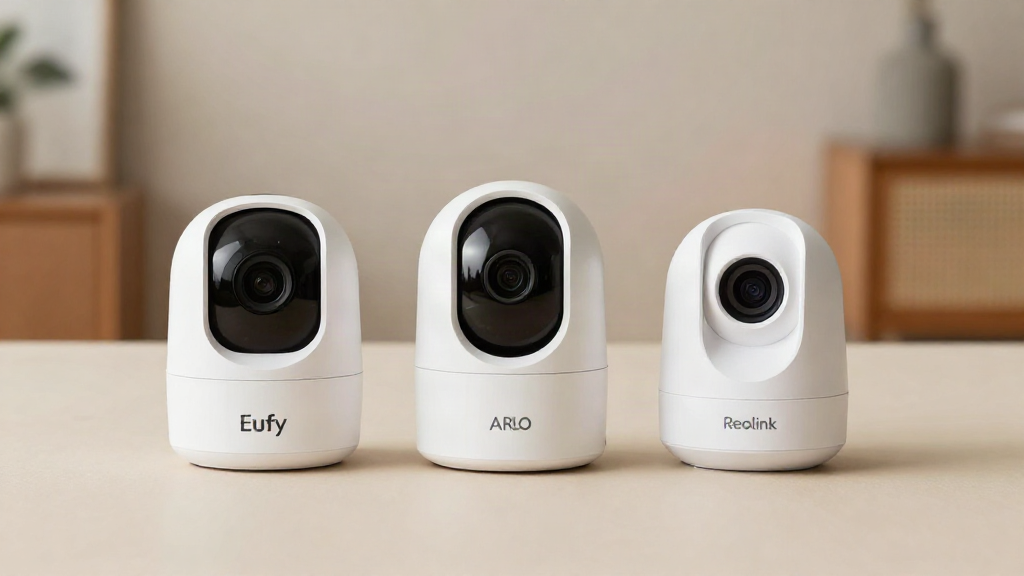
You bought your security cameras online. Maybe a Eufy starter kit from Amazon. Maybe an Arlo system from JB Hi-Fi. Maybe you went straight for Reolink after reading the reviews. Good cameras—solid hardware, smart features and all the specs you need.
But then reality hit: mounting them at the right height, getting the WiFi signal to reach the side gate and drilling holes you did not want in your brickwork. Suddenly the DIY savings do not feel so worthwhile.
Every week we hear from Sydney homeowners who already own great cameras and just need them installed properly. This comparison covers the three brands we see most often—Eufy, Arlo and Reolink—so you can decide which one fits your property and whether professional installation changes the equation.
Eufy security cameras
What they are: Eufy, by Anker, makes battery-powered and wired security cameras with impressive local storage. No monthly subscription is needed because footage can save to a HomeBase unit in your house.
Best for: Homeowners who want privacy, local storage, no additional monthly bill and a clean white aesthetic.
Video quality: Most models offer 2K resolution. It is sharp enough to read number plates at close range, and standard night vision is solid.
Installation complexity: Medium. Solo cameras are simple to mount and pair, but WiFi range can become difficult. Eufy cameras need a strong connection back to HomeBase, and in Sydney brick and tile-roof homes that signal can drop quickly beyond the back wall. The driveway, shed and front gate are often exactly where coverage is needed and where connectivity is weakest.
Solar compatibility: Eufy sells separate solar panels for its SoloCam range. They work well, but the camera and panel are separate units, meaning another mount and a cable to position neatly.
Bottom line: Great cameras when positioned close to the house. Perimeter positions may need a WiFi extender or professional placement.
Arlo security cameras
What they are: Arlo is one of Australia's most recognised wireless camera brands. Its Pro and Ultra series are fully wire-free, battery powered and weatherproof.
Best for: Suburban homes with a mixture of open and tricky positions, and owners who value a polished app experience.
Video quality: Arlo Ultra offers up to 4K HDR, with colour night vision on Ultra models. The Pro 5S offers 2K video with a built-in spotlight.
Installation complexity: Low to medium. The magnetic mounting system on newer models makes positioning and adjustment easy. Arlo also tends to maintain a wireless connection at longer distances better than Eufy.
The catch: Many of Arlo's best features—including smart alerts, cloud recording and activity zones—require an Arlo Secure subscription. Without it, functionality is more limited.
Solar compatibility: Arlo solar-panel chargers connect neatly to the camera and provide the most integrated-looking solar solution of these three brands.
Bottom line: The strongest app experience and excellent wireless range. The subscription cost is the main consideration.
Reolink security cameras
What they are: Reolink offers battery, WiFi, PoE and 4G cameras, often at a lower price than equivalent premium models. Specifications are generous and build quality is strong for the price.
Best for: Larger properties, rural homes and positions without a WiFi signal. Reolink's 4G range is useful for sheds, vacant land and construction sites.
Video quality: Up to 4K on top battery models such as the Argus 4 Pro, with a wide field of view on selected models.
Installation complexity: Variable. The app and initial setup are not as polished as Arlo, and the quick-start material assumes some technical confidence.
Where Reolink wins: Its 4G LTE cameras can operate without fixed WiFi or mains power using a SIM card and solar panel. That makes otherwise impractical locations possible.
Solar compatibility: Excellent. Reolink solar panels are generally larger and charge effectively, while integrated solar models reduce the number of separate components.
Bottom line: The best value and most flexible option for difficult locations, with a slightly less polished setup experience.
Side by side: what matters for Sydney homes
| Factor | Eufy | Arlo | Reolink |
|---|---|---|---|
| Video quality | 2K | Up to 4K HDR | Up to 4K |
| Subscription | Not required | Required for key recording features | Not required |
| WiFi range | Average | Strong | Good |
| Solar integration | Separate panel | Integrated-looking panel | Large panel, effective charging |
| 4G option | No | No | Yes |
| App polish | Good | Excellent | Adequate |
| Price | Mid-range | Premium | Budget to mid-range |
Which one should you choose?
Choose Eufy if: You want local storage without a subscription, your cameras will sit relatively close to the house and clean design matters.
Choose Arlo if: You want the most polished app and strong wireless range and are comfortable paying for a subscription.
Choose Reolink if: You need cameras where there is no WiFi or fixed power, including driveway gates, sheds, rural blocks and construction sites.
The professional installation difference
People often own excellent cameras but do not get the security they paid for because the positioning is wrong, the WiFi signal is marginal or the camera is sitting on a windowsill rather than mounted where it can provide a useful field of view.
Professional installation changes that. We position cameras for useful coverage, place solar panels for maximum sun exposure, assess wireless signal strength and keep visible cabling neat.
We install Eufy, Arlo and Reolink systems across Sydney—from the Northern Beaches and Hills District to the Inner West and South West.